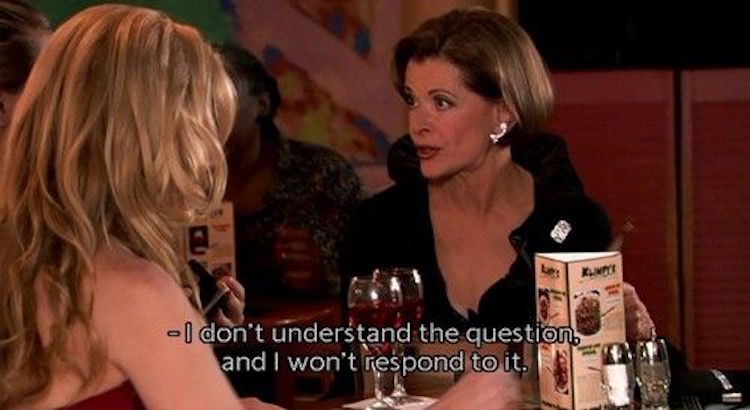
It’s a truth universally acknowledged: nobody enjoys being probed with questions about their personal life.
To avoid giving away more than you wish during a stealth information-seeking attack, it’s critical to psychologically prepare by using some effective strategies used by most lawyers.
Why do people ask personal or inappropriate questions?
Asking questions and sharing information is a way of building trust and forming social bonds. Humans are naturally curious. We love discovering little known information about others, because it gives us a social metric to compare our own success or failure.

In its least offensive form, personal questions can be asked out of curiosity and an genuine desire to get to know you. On the other end of the spectrum, however, these interrogations can be carried out with the goal of obtaining your personal information and misusing it.
If someone knows intimate details about your personal life, financial or career situation, for example, they not only have an insight into what makes you tick, but are also in a powerful position to use that information against you immediately or in the future.
Shock tactics, manipulation and stealth psychological strategies may be used trick you into disclosing information that you would not otherwise be prepared to part with. For some unscrupulous people, probing for your personal information is not just a hobby, it’s a blood sport.
How to identify someone likely to ask personal questions?
People who overstep the mark with personal questions are generally not in your inner friendship circle or professional network.

The very reason you are naturally reluctant to share information with them is because they live on the outskirts of your social world. Their capacity to keep your personal information private, or maintain your strict confidence, is largely is unproven.
It stands to reason, then, that people who have no reservations when it comes to asking you personal or inappropriate questions are not entitled to that information.
After all, if you wanted that person to know details about your private life, you would have volunteered the information to them in the first place.
What strategies are commonly used to extract personal information?
People who routinely ask personal or inappropriate questions are usually brash and unapologetic. Some common strategies involve:

Boldly asking you a personal question out-of-the-blue.
This surprise tactic guarantees you will be so stunned that you are likely to offer up the information immediately.
Rapid-fire questions used to disrupt your equilibrium and impact your judgement.
The speed and intensity of this style of questioning leaves you with zero time to answer with anything other than the truth before the next wave of questions hits you.
Feigned concern about you.
At face value, it seems as though personal enquiries come from a place of care or concern about your wellbeing. For example:
You look really exhausted lately, is everything okay at home with you?” or “You seem so overwhelmed. Are you coping with all your work?”
These questions make you feel that your best interests are at the heart of the enquiry, but in reality they mask a hidden agenda. As you explain what is worrying you, immediate insight is gained into your deepest life troubles. That information can now be used to spread rumours about your failed relationships; to damage your reputation; or to make an argument to your boss that you are not coping and to steal your promotion.
People who seek such information do not feel remorse for making you feel awkward or embarrassed by their enquiries.
In fact, they thrive on it because it means they are able to glean the information they desire.
Think like a lawyer to avoid awkward social encounters
Experienced CEOs, business owners and lawyers rarely get caught giving away information they do not purposely intend to reveal. So how do they do it?

Lawyers, in particular, go into every social or work situation with the upper hand.
This is because lawyers trade in the exchange of information everyday. They are considered with their responses and trained to weigh facts, risks and possible outcomes. Lawyers understand common motivations behind enquiring human minds, and the far-reaching implications of private information getting into the wrong hands.
When asked a question, either socially or professionally, lawyers will pause and think carefully about their answer. These precious few seconds are critical time needed to mentally cycle through and analyse:
- Who the information is likely to benefit or work against
- What purpose the information could potentially be used (whether good or bad)
- Why the question is being requested in the first place
- Whether there is a need for the information to be shared
Try to forecast the future flow-on effects of revealing information about yourself
It is always worth using the same strategies employed by a lawyer. Ask yourself why someone is asking a particular question before deciding whether to answer.
Put yourself in the position of the person asking you a probing question. Think about why they need that information and whether their possession of it could be harmful to you.
Ten strategies to avoid answering inappropriate questions
1. Answer the original question with another question
Why do you want to know?”
This strategy allows you to take control of the conversation. That person must explain the reason behind their enquiries into your personal life. This usually generates enough awkwardness for them to drop the question entirely.
2. Respond with sarcasm or a joke
Q: “How much money do you make?”
A: “Not enough to buy my way out of this exquisitely uncomfortable conversation”
With a bit of luck, they will get the hint that they have overstepped and move on.
3. Redirect the question to a topic that you do feel comfortable discussing
This is a common strategy used by politicians when dealing with the media. It involves avoiding the original question by answering the question you wish that you had been asked.
4. Call it out
Embarrass the person asking inappropriate questions by pointing it out in a light-hearted way.
Wow, you really do ask a lot of personal questions don’t you?!”
Laugh, then walk away to prevent the conversation from going any further.
5. Begin your answer by saying the word “No”
This is a psychological technique which generates the expectation that your response will be negative, paving the way for you to avoid answering the question altogether.
No, I won’t answer that.”
6. Answer ambiguously or immediately change the subject
That’s a good question! What do you think?”
Combine this strategy with a wry smile and most decent people will immediately understand not to push any further.
7. Play for time
Pretending, for example, that you don’t understand the question causes the person asking to experience some level of discomfort and the need to explain further. This gives you extra time to think about how much information you wish to reveal.
8. Ignore the question and continue the conversation as though it were never asked
A simple but highly effective strategy – the person asking the question will have no option but to move on or embarrass themselves by going over old ground.
9. Set boundaries
If someone is being particularly aggressive or persistent in their line of questioning, you may need to establish clear boundaries by firing back a few personal questions of your own.
This quickly places that person on the back foot and distracts them from their original agenda. It also establishes hard boundaries that they will not easily cross in the future.
10. Don’t answer the question at all
A nil response is the most difficult strategy to execute.
But if you can hold your nerve and maintain eye contact long enough for the person questioning you to lose their nerve, it is also the most effective.
At the end of the day
You may feel obligated to answer every question you are asked out of politeness but, the reality is, you are rarely ever compelled to.
